The operator glances at another feed. A Russian drone moves low, steady, following a path that cannot be easily disrupted. He shifts slightly, listening to the generator, to the distant, rhythmic thud of artillery that now blends into the background.
Ukraine still holds an advantage in integration.
Its drone ecosystem is broader and more adaptive, combining FPV strike drones, interceptor drones, maritime systems, and long-range platforms into a layered structure. Production has scaled rapidly, with tens of thousands of interceptor drones designed specifically to target incoming UAVs, turning air defense into a distributed, low-cost system rather than a purely missile-based one⁷.
At the same time, Ukraine has extended its reach into Russia itself, striking oil terminals, refineries, and logistics nodes. These are not symbolic attacks. Each strike forces repair cycles, redistributes resources, and imposes friction on the system behind the front line⁷.
Russia answers by maintaining contact everywhere.
Rather than concentrating forces for a single breakthrough, it probes continuously along the line, shifting pressure, reinforcing where resistance weakens, and sustaining assaults across multiple axes⁸. The approach trades speed for persistence, betting that enough localized pressure, applied long enough, will produce structural failure.
The trade remains stark. Russia buys pressure with mass and persistence. Ukraine buys time with coordination and speed.
Above it all runs a quieter contest that rarely appears in footage.
Connectivity.
Ukraine’s battlefield still depends heavily on Starlink, the network that allows units to coordinate across distances where traditional communications would fail⁹. Russia is building alternatives, launching low-orbit satellites, attempting to close that gap. The drone war is also a bandwidth war, a latency war, a contest over whether information arrives in time to matter.
A delay of seconds can mean a missed strike. A dropped connection can mean a lost position.
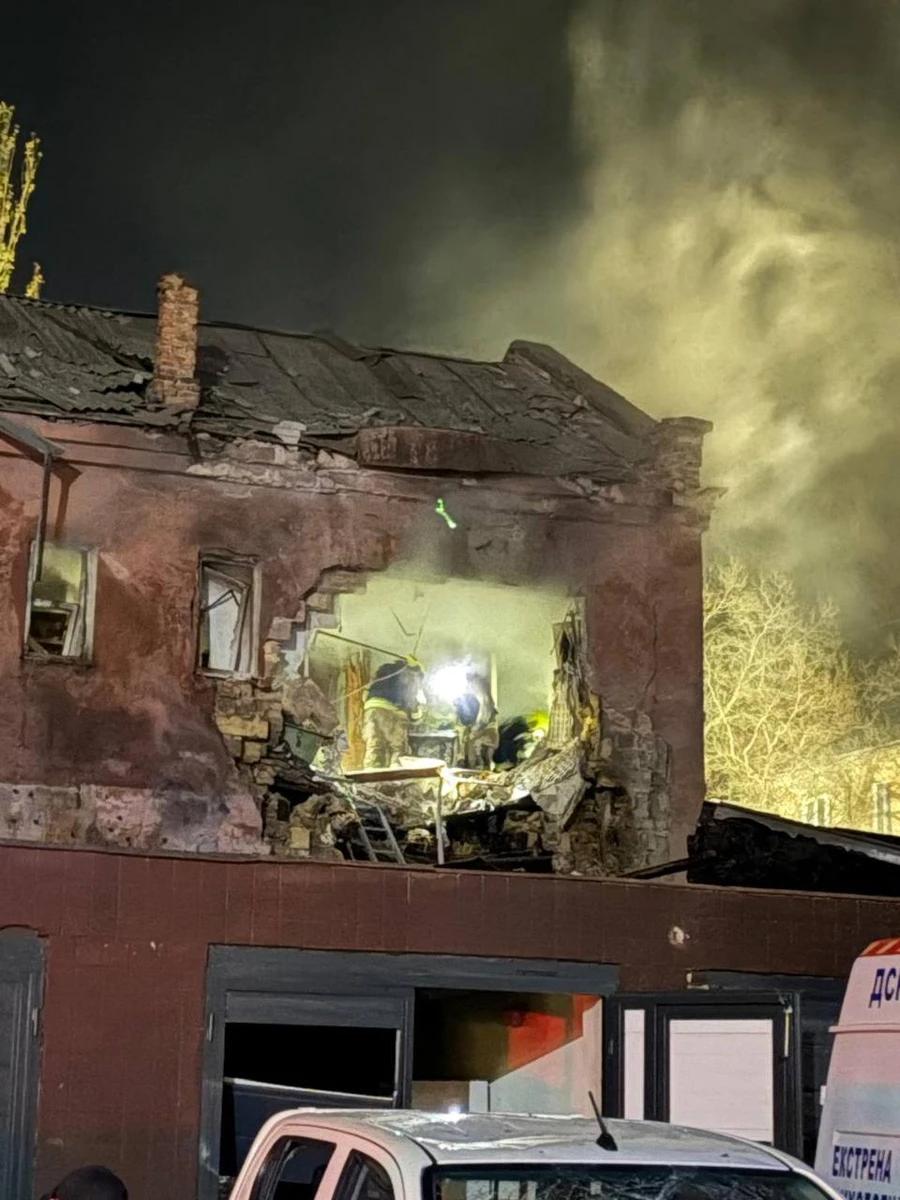
Back in Kyiv, Svetlanka was at work and on her second cup of coffee. The day was sunny, and flowers were starting to bloom. The routine holds, until it doesn’t—until a building is gone, or someone doesn’t answer a message.
In March, civilian casualties rose again, driven increasingly by drones that now reach beyond the front, into towns, markets, roads¹⁰. The boundary between battlefield and background has thinned to the point where it often disappears.
The operator in the warehouse leans back for a moment, then forward again as another alert appears. He does not think in kilometers. Those numbers come later. His war is measured in completed cycles—how quickly a signal becomes a decision, how often that decision arrives before the other side can respond.
Outside, the road remains empty.
What once moved along it—trucks, people, ordinary life—has been replaced by signals, patterns, fleeting signatures of heat. The war has not stalled. It has compressed, accelerated, turned space into time.
And somewhere between a message sent at dawn and a system alert that lasts less than a second, it keeps moving, faster than the story most people are still telling about it.