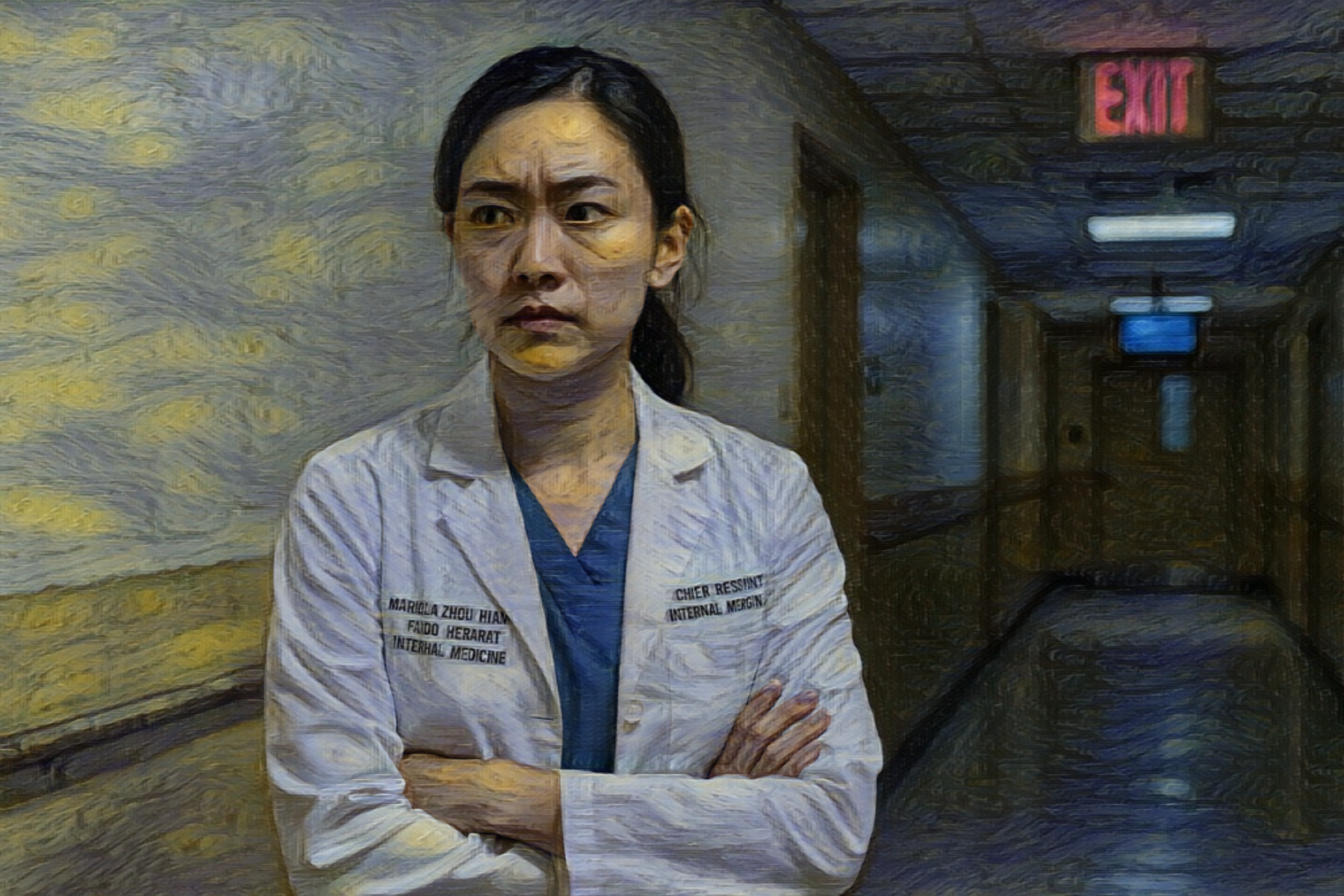
The acetone stung first.
Marcela Zhou Huang peeled off her gloves just outside Room 312, blinking through the hospital-grade disinfectant that clung to the tile floor and the back of her throat. San Francisco General always smelled like duty—burnt alcohol wipes, floor polish, and sweat caught behind an N95. It grounded her. Calexico had smelled the same way when she was a kid, trailing her mother through the free clinic.
She tapped her badge—Dr. Marcela Zhou Huang, Chief Resident, Internal Medicine—and handed over a stack of charts. Her attending grinned. “Still weird they let you run this place,” he said.
She smiled but didn’t answer. The joke sat too close to the truth.
Marcela had been born in Mexicali to Chinese parents and grew up in the half-town of Calexico, where the border ends but the forgetting begins. Her father—once a literature professor—washed dishes. Her mother cleaned motel bathrooms. And Marcela, undocumented by the time she reached high school, learned how to fill out a W-2 with someone else’s Social Security number. DACA changed that. Briefly.
“We don’t want special treatment,” she’d told a reporter once. “We just want to keep treating patients.”¹
That was two years ago. Now her renewal was in limbo—again. The Fifth Circuit’s January ruling had frozen new applications and sent legal shockwaves through institutions like hers, where nearly one in three patients spoke Spanish, Tagalog, or Cantonese more fluently than English. Without DACA, she wasn’t just undocumented; she was unlicensed, unemployable, and one wrong turn away from detention.