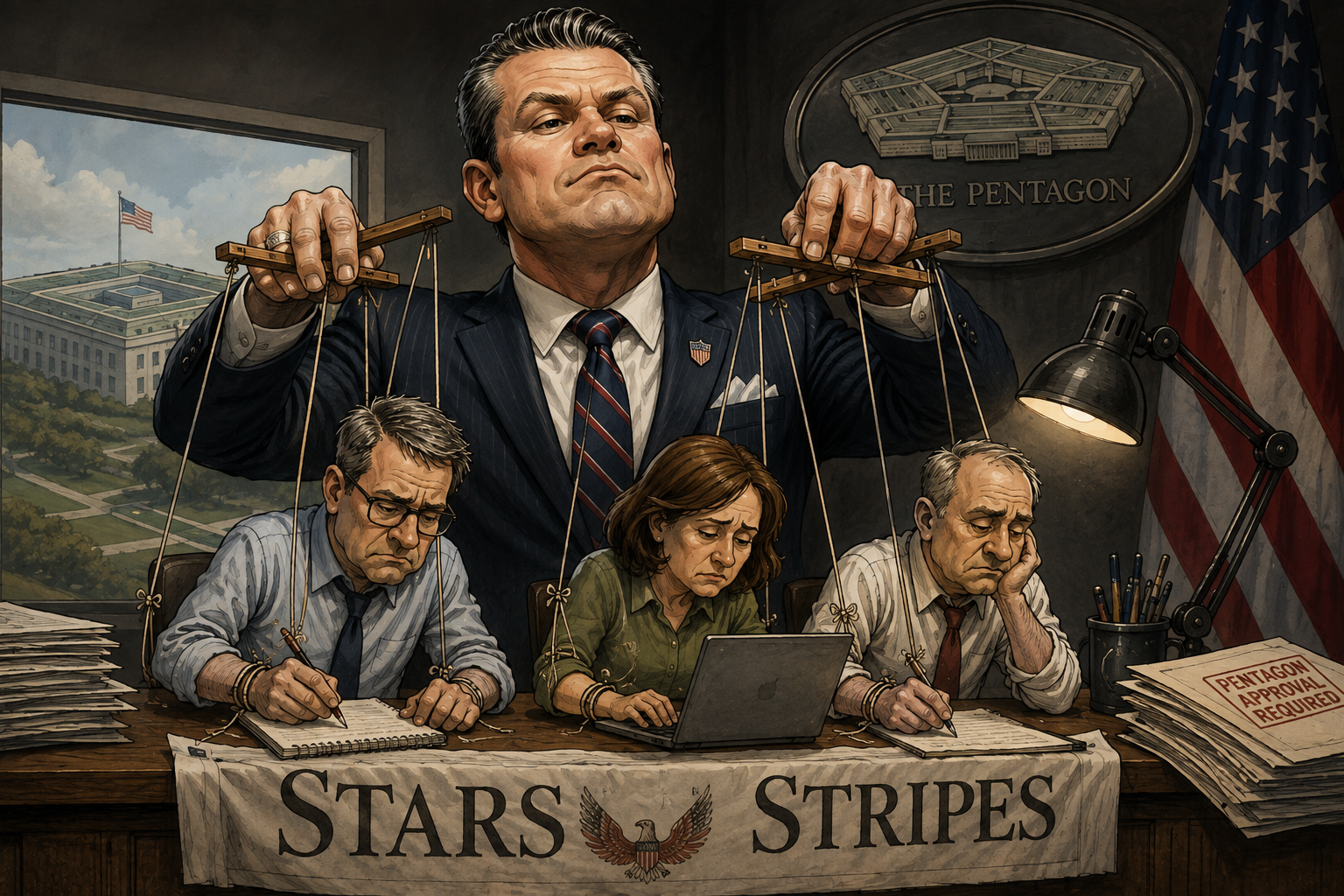
The Pentagon seems to have found a modern answer to an old censorship problem. Crossing out a newspaper story with a blue pencil looks crude, and closing the newspaper looks worse. Both leave fingerprints. It is much tidier to promise that the paper is independent, put the people who control it inside your own organization chart and fire anyone impolite enough to point out the contradiction.
That is essentially what happened Friday at Stars and Stripes, the remarkably durable newspaper that has been following American troops around the world since the Civil War. On August 21, the Pentagon issued a new directive assuring everyone that Stars and Stripes would remain editorially independent, free from censorship and protected from military and public-affairs interference. On the same day, it moved to fire the newspaper’s editor-in-chief, Erik Slavin; Middle East reporter Lara Korte; and longtime publisher Max Lederer.¹
The Pentagon called it insubordination. Slavin says his offense was telling CBS that censorship would be a “red line.” Korte had told the network that she worked for Stars and Stripes and its readers—not for the Pentagon, the administration or military policymakers. Lederer, who had already announced plans to retire after more than 30 years at the paper, said his understanding of its mission differed fundamentally from that of Pentagon leadership. The three received separation notices and have appeal rights, so “moved to fire” remains the more precise description of what happened.²
The distinction undoubtedly matters in the federal personnel manual. I suspect it matters rather less to the reporters still sitting in the newsroom.