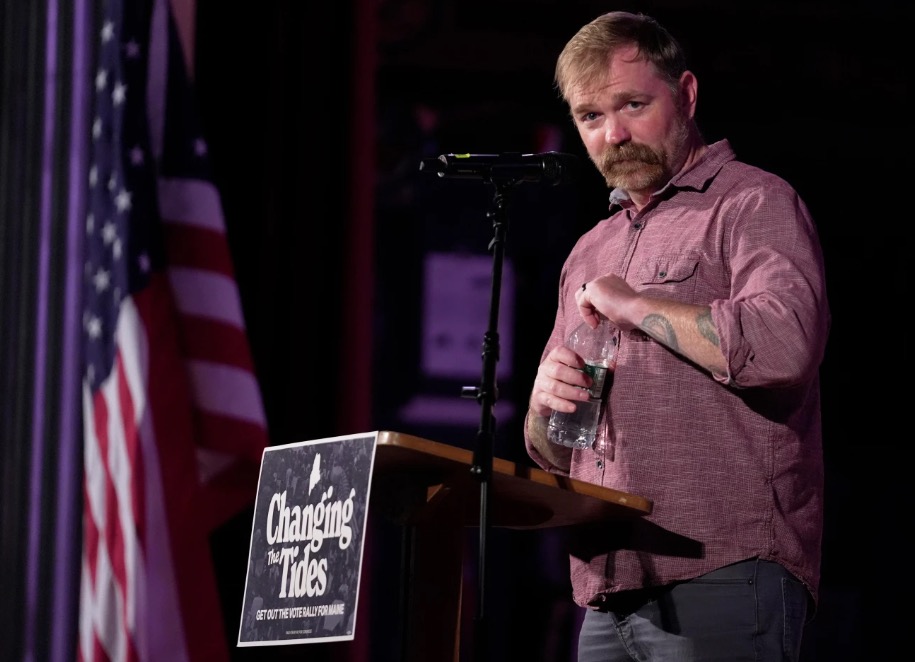
The bar in Split was loud, cheap, and open past reason. It was 2007, and Graham Platner was a Marine — twenty-something, somewhere on the Adriatic coast with the night still young. Someone had a design: a skull-and-crossbones. Military imagery, they figured. Standard death. The kind on pirate flags and biker jackets.
He sat down and got inked.
He didn't know — he says — that the design resembled the Totenkopf. The "death's head" symbol worn by SS concentration-camp guards. He covered it later, after someone explained what the shape meant to other people.
That one night in Croatia is now doing enormous work in a Maine Senate race. Before asking what it proves, it's worth asking what we're not talking about.
Susan Collins is running for a sixth term.
Collins first ran promising to serve no more than two.¹ She voted to confirm Brett Kavanaugh after he told her Roe v. Wade was "settled law." When the Supreme Court overturned Roe in 2022, Kavanaugh was in the majority.² And in 2020, a defense contractor whose company had received an $8 million Navy contract that Collins helped secure organized more than $200,000 in illegal contributions to her campaign and a super PAC supporting her.³
Collins was not accused of knowing about or participating in the scheme. But the money moved. The contract existed. The legal distance between them was tidy. The moral distance is harder to measure.
These are questions of public power: promises made to voters, consequential votes, money orbiting campaigns, influence systems that keep incumbents in place.