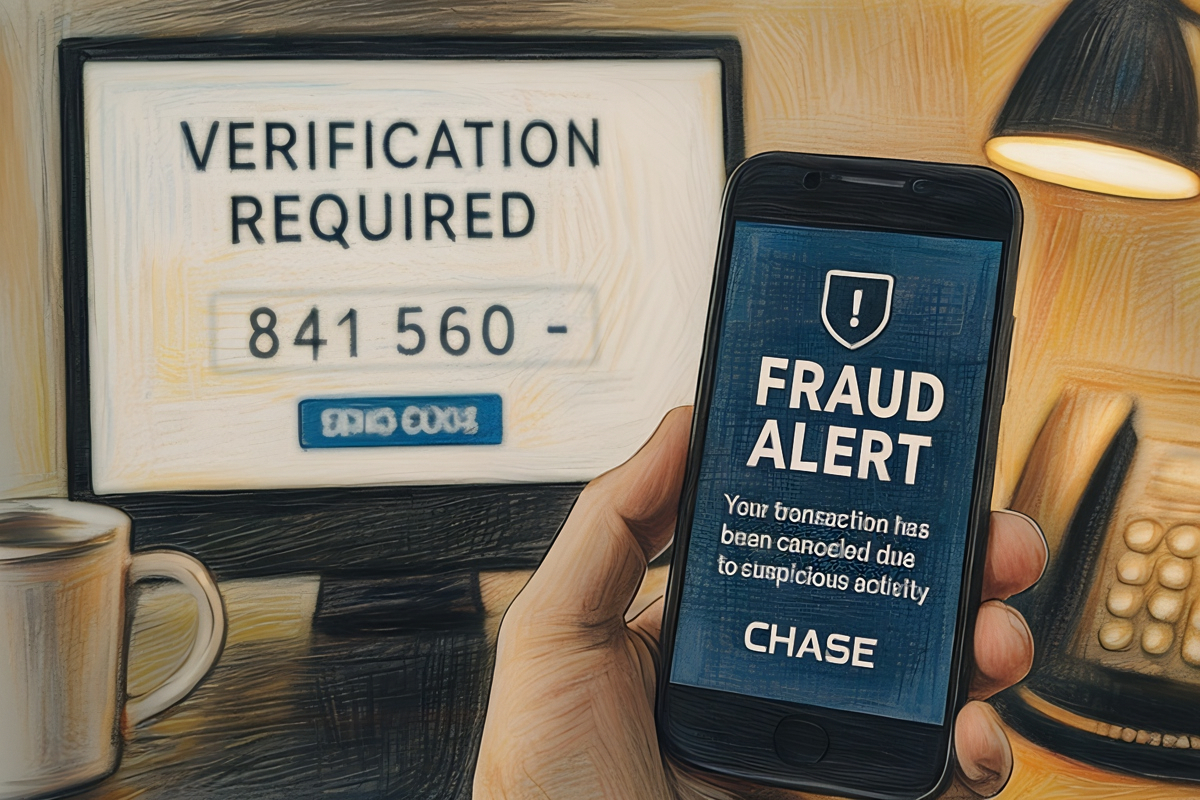
The call came just as I set my coffee down—one of those “urgent but polite” texts from Chase J.P. Morgan warning me that a transaction had been cancelled for “potentially fraudulent activity,” which is corporate code for: you’re about to spend the rest of your day proving you exist.
I dialed the number. A voice from a Mumbai call center—a bright, overworked voice—answered. I could hear the script pages flipping.
“Sir, please confirm your name?”
We go through the warm-up act—address, account, last four digits—and then he asks, with surprising gravity, what he should call me.
“Bill,” I said. “Just Bill.”
“Hello, Mr. Just Beel.”
Nothing prepares you for the moment a bank decides your identity is a hypothesis. Increasingly, the modern world doesn’t verify transactions; it verifies people—and it makes us audition for our own lives.
He launched into the ritual: he would text me a code; I would confirm yes; he would ask questions; I would comply like a man testifying before a committee investigating the circumstances of his own birth.