Each time one AI proposed a human signal, the other made it unusable. Emotion could be generated. Hesitation could be performed. Messiness could be planted. Self-doubt could be staged. Even a commitment to standards could become just another trick once the standard had been named.
The test began eating itself.
Eventually, one AI estimated there was perhaps an 80 percent chance that the speaker was human. Later, when I asked it to judge not merely the text but the agency directing the exchange, it raised the estimate to 90 or 95 percent.
The number had the comforting feel of an answer. That is why numbers can be dangerous.
Ninety-five percent human sounds close enough until the voice is signing a byline, giving medical advice, comforting a child, replacing an actor, or persuading a voter. Then close enough is not enough.
The old Turing Test asked whether the machine could fool the judge. We are now living with the next question: what happens after the judge is fooled?
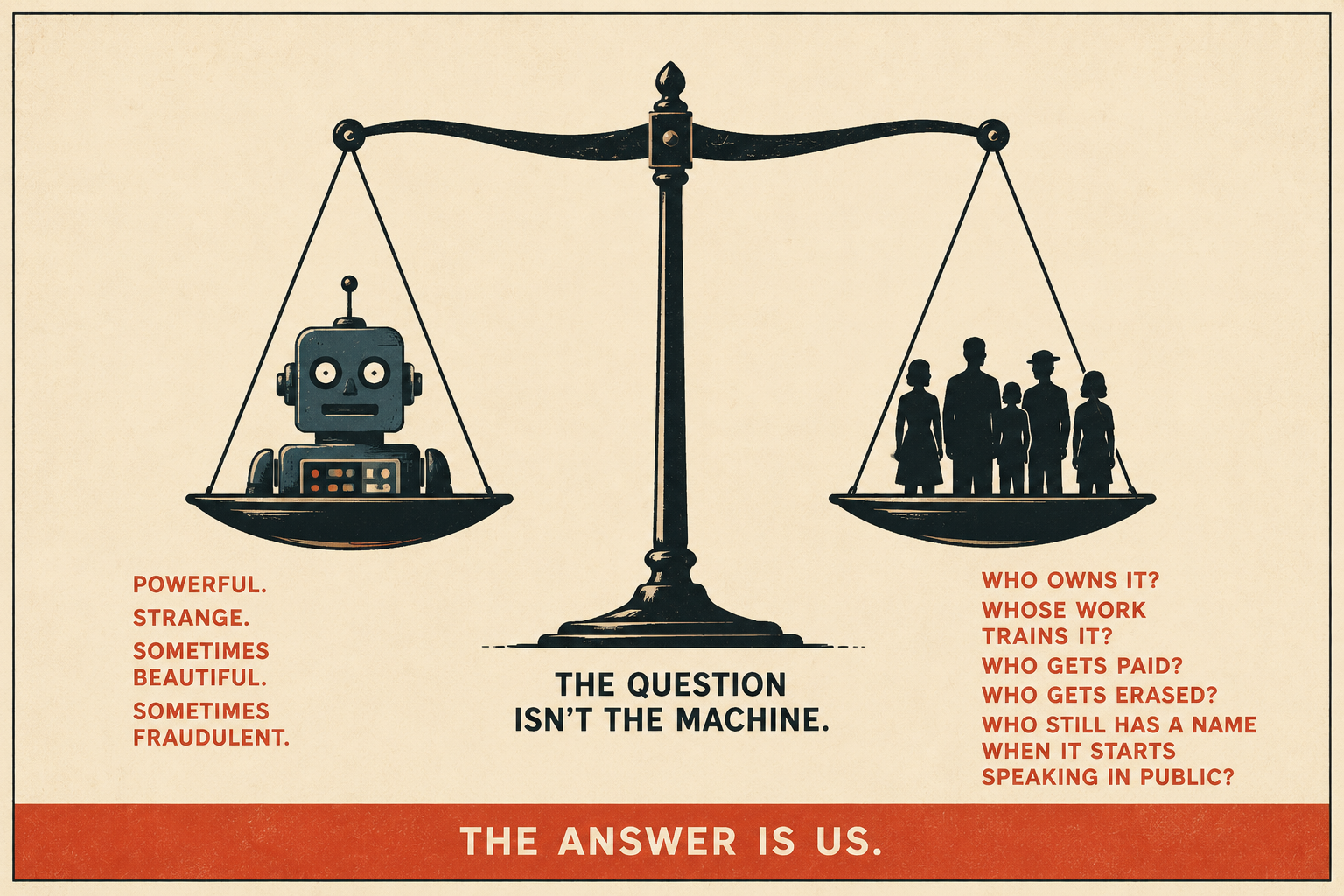
This is where the argument about AI usually splits in two.
One side sees theft. It is not wrong. If a studio can scan an actor, train on performances, and reuse a face, voice, body, or style without meaningful consent, then “innovation” becomes camouflage. If a newspaper replaces reporting with fluent synthesis, the loss is not nostalgia. It is the disappearance of someone who actually went somewhere, saw something, asked someone, checked something, and can be challenged afterward.
The other side sees abundance. It is not wrong either.