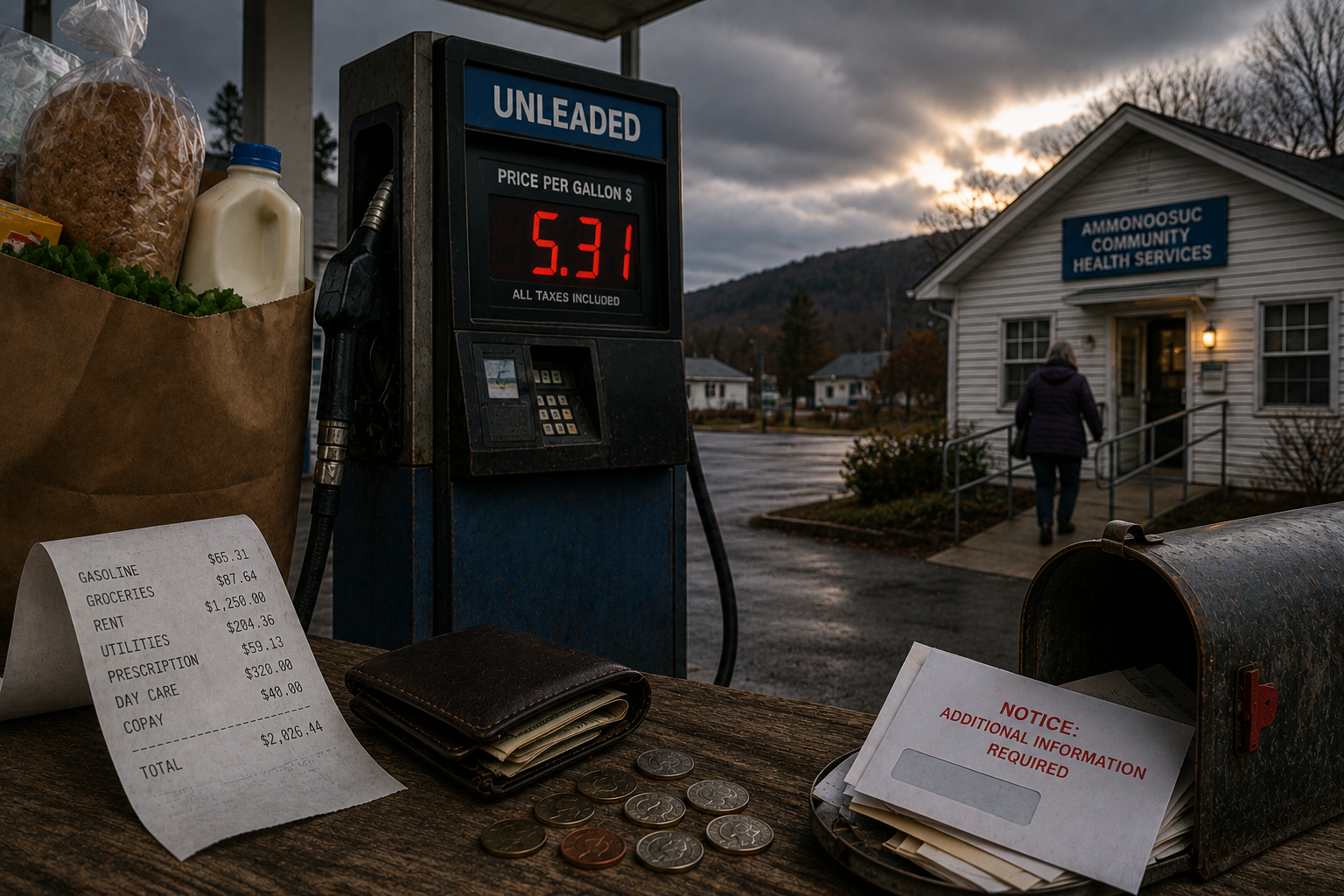
The warning arrived as a receipt.
The tank cost more to fill. The grocery bag held less. The benefit letter asked for another proof. The clinic appointment moved farther away. From above, the economy still showed movement: jobs, growth, spending, markets. At the kitchen table, the math had changed.
Coulter Lewis, the co-founder of Sunday Lawn and Garden, gave the Associated Press the phrase that best explains the moment. His customers had not disappeared. They were trading down, doing more work themselves, and buying from him because professional lawn services had become too expensive.
“They’re spending more money on fewer things,” he said.¹
The national indicators deserve to be taken seriously. The Bureau of Labor Statistics reported that employers added 115,000 jobs in April 2026 while unemployment remained at 4.3 percent.² FactCheck.org’s April review found that the economy grew 2.1 percent in 2025, real weekly earnings had risen over Trump’s first fourteen months, and the stock market had recovered after its sharp fall.³ These figures place a limit on any honest argument about the economy. The country is still producing, hiring, selling, and consuming.
The strain appears in the distribution.
GDP can rise while necessities take more of a paycheck. Retail sales can grow because gasoline costs more. Food-assistance rolls can fall without proving hunger has fallen. A clinic can close long before a national health survey records the loss. The numbers measure motion. They do not always measure margin.