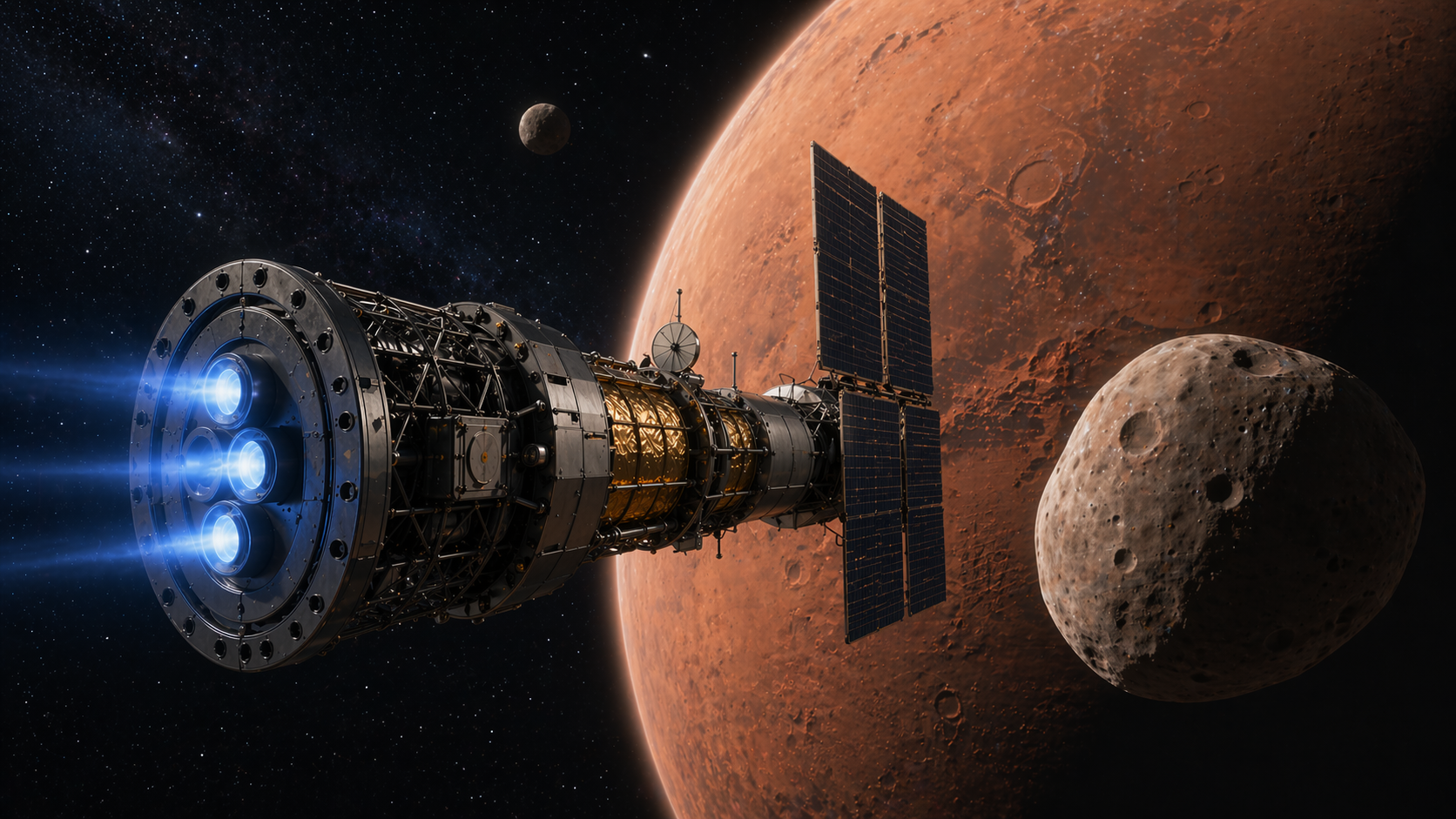
The checklist sits on a second monitor, half-hidden behind a telemetry window, while Alvarez leans back just far enough to see both without moving his chair. He came over from propulsion analysis five years ago, after a launch scrub that turned on a valve fault no one had modeled correctly, and he still keeps that report in a folder he doesn’t open. The spacecraft is already two days out, coasting on the last chemical burn, and the line he’s watching for is unremarkable: reactor enable, conditional.
He doesn’t say anything when it clears. He marks the time, then waits through the lag that always follows commands sent across that distance, long enough for doubt to creep in before the data returns and settles where it should.
“You don’t celebrate this step,” he says later. “You verify it, because if it’s wrong, you won’t get a second try.”
What changes in that moment doesn’t register as a spike or a surge. It shows up as continuity. Heat where there was none, electrical load that doesn’t decay, a thrust profile that begins and does not end. The spacecraft stops behaving like something that was thrown and starts behaving like something that works.
Call it a small thing—the difference between a push and a process—but it changes what the rest of the mission is allowed to become.
Alvarez learned his instincts on chemical systems, where propulsion is a short, decisive conversation with physics. You burn propellant, you get your delta-v, and then the system goes quiet, leaving guidance and small corrections to carry you the rest of the way. It is elegant and brutally constrained at the same time. You can reach a destination with precision, but you arrive with whatever you managed to pack at the beginning, no more and no less.