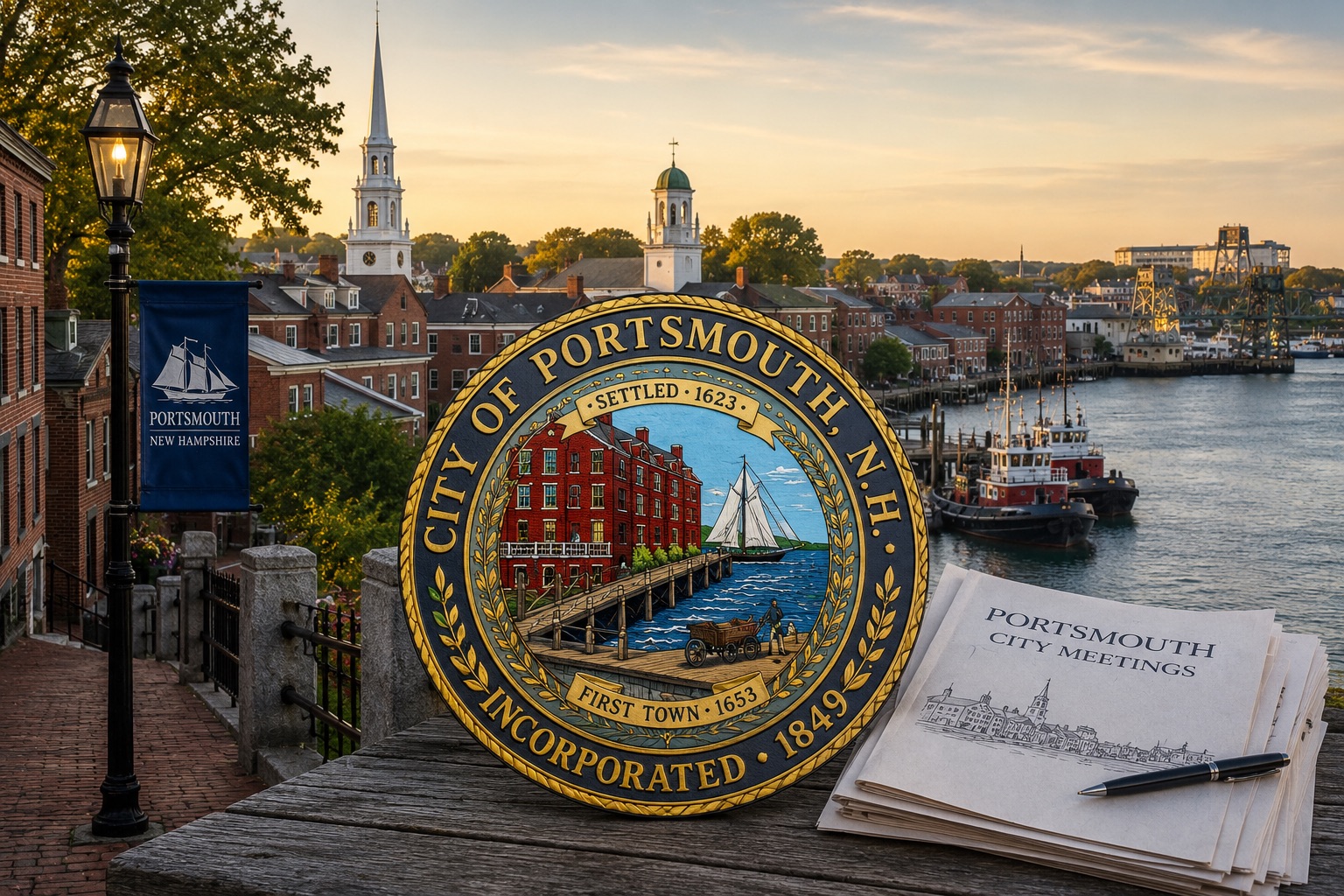
Portsmouth, New Hampshire, rarely changes by thunderclap. It changes when an electricity rate moves by a few cents per kilowatt-hour, when a committee wonders whether a tax break will produce housing or only reward development that would have happened anyway, when someone argues over brick color in the Historic District, when a cemetery wall starts to fail, when a school board decides how much surveillance belongs in a building full of children, or when an audit committee asks whether oversight is independent enough to be trusted.
That is the nature of local government. The arguments sound small until they reach the household.
In early June, Portsmouth’s public meetings moved across energy, housing, historic preservation, cemetery restoration, school safety, and financial oversight. The subjects were different. The underlying question was the same: how does a city govern when every good idea eventually becomes a bill, a rule, a tradeoff, or a maintenance problem? The answer is not usually dramatic. It is usually on page three of the packet.
The Power Bill Teaches Civics
Portsmouth’s community-power program began with a promise that made sense: local control, cleaner electricity choices, and the possibility of lower prices through aggregated buying power. Then the market turned.