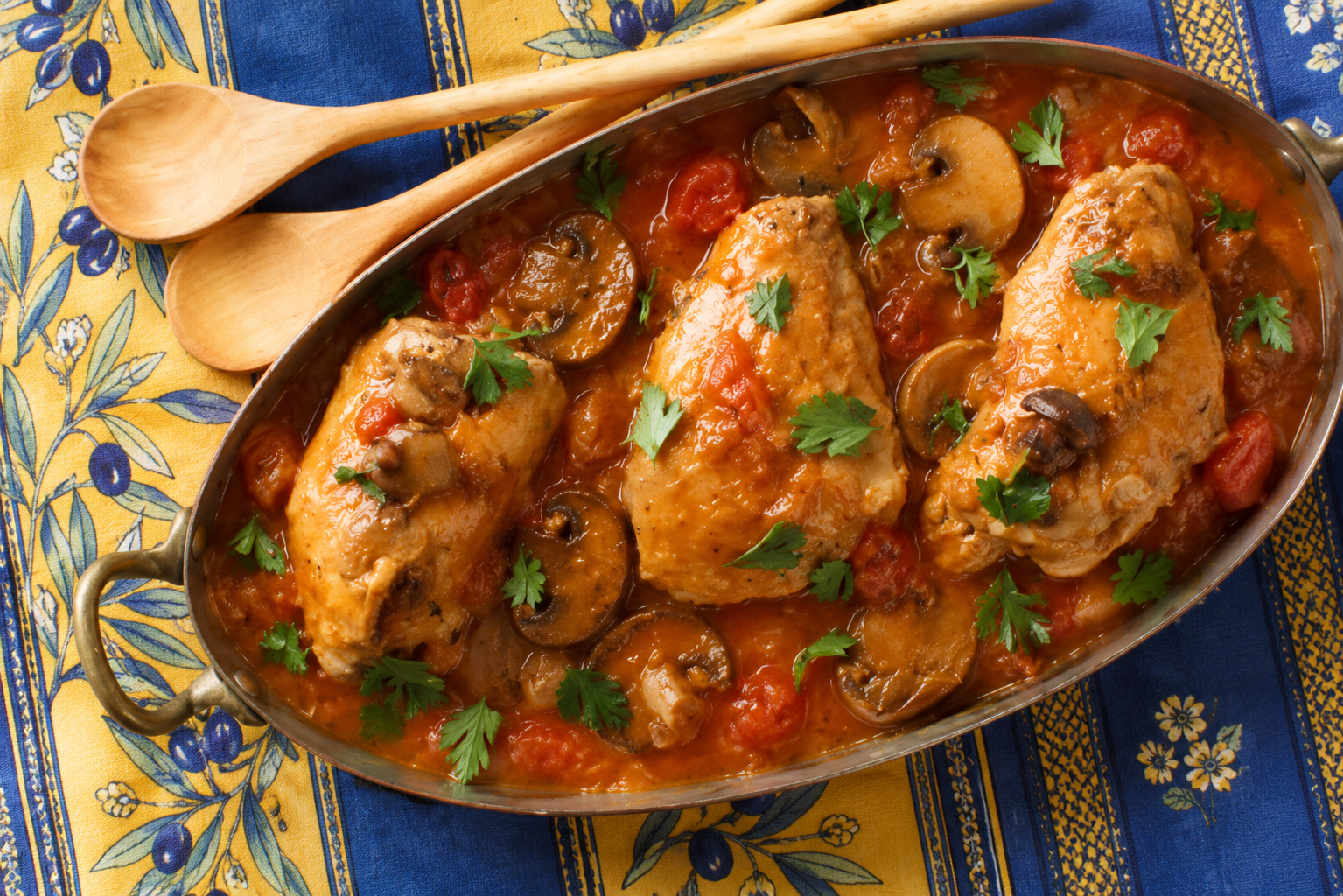
Poulet Chasseur sounds like the kind of dish that requires a French grandmother, a copper pan and an uninterrupted afternoon. It doesn’t.
The name means “hunter’s chicken,” and the dish comes from the French tradition of cooking meat with mushrooms, herbs, wine and whatever else might plausibly have come back from the woods. There are countless versions. Some use white wine, some red. Some include tomatoes, while others depend more heavily on stock, demi-glace or cream. Restaurant versions can become elaborate, but the basic idea is wonderfully straightforward: brown the chicken well, build the sauce in the same pan and let everything cook slowly until the flavors come together.
Mine uses bone-in, skin-on chicken thighs, mushrooms, shallots, white wine and stock, with tomatoes if I’m in the mood for them. Cognac is optional, although flaming it is part of the fun.
Chicken thighs are ideal because they have more flavor than breasts, tolerate slow cooking and contribute both fat and richness to the sauce. Jacques Pépin has a useful trick for helping them cook evenly. Put each thigh skin-side down on a cutting board, then make a shallow cut along each side of the bone from the flesh side. Don’t cut through the skin. This opens the thickest part of the thigh, where the meat is usually slowest to cook.
He also starts the thighs skin-side down in a cold, dry skillet. As the pan warms, the fat beneath the skin renders gradually instead of tightening immediately against a very hot surface. Once the chicken begins to sizzle, lower the heat and let it cook slowly enough to develop a deep golden crust. You want crisp skin, not black patches and smoke alarms.