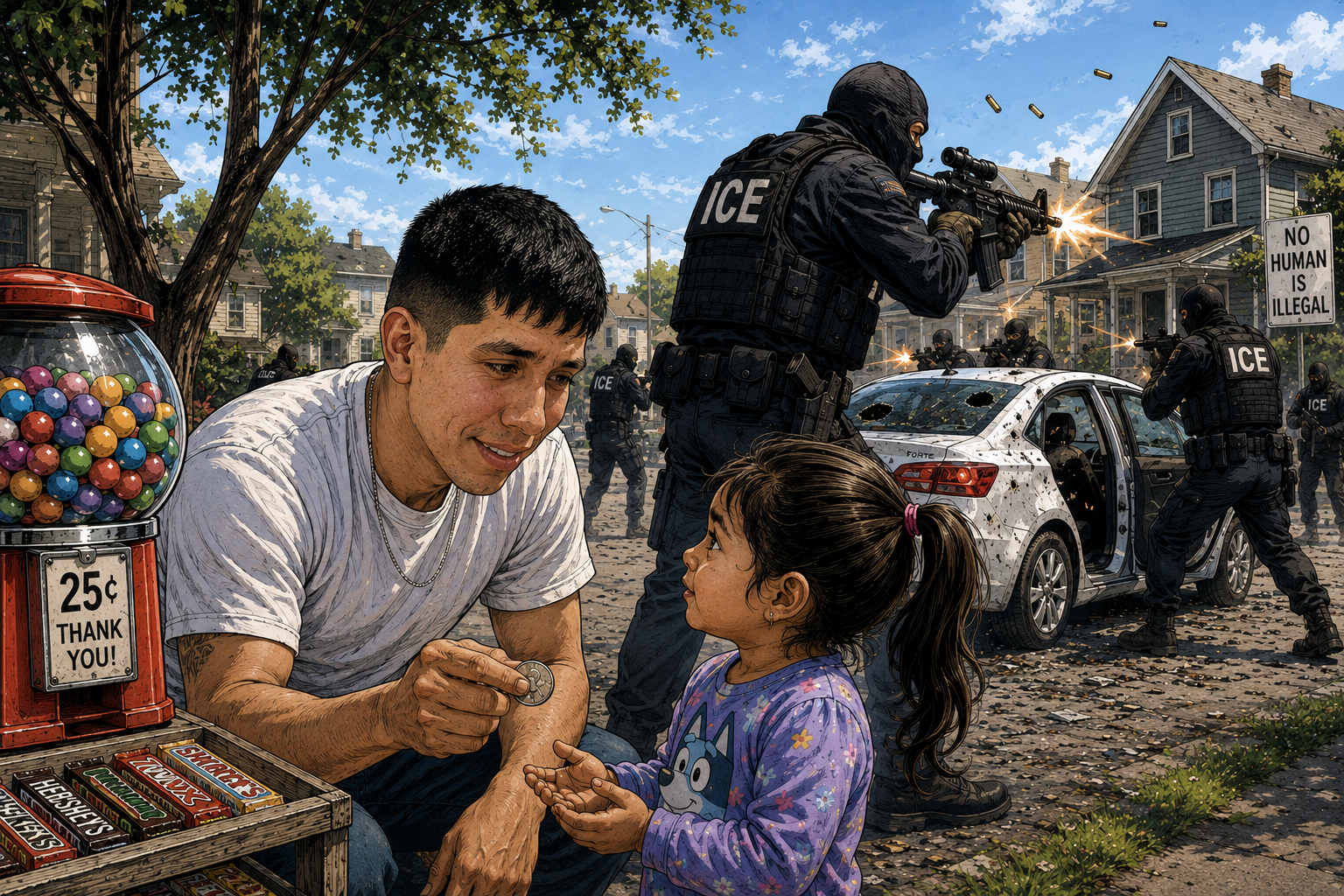
Johan Sebastián Durán Guerrero had a small routine with his 3-year-old daughter. At a neighborhood laundromat in Biddeford, Maine, he would put quarters in her hand for the candy machine and wait while she made the difficult decision children have been making forever: Which one?
While she decided what to buy, Johan would pick up around the laundromat. He didn’t work there. He simply noticed what needed doing. Sadie Dilboy, who runs the place, remembered him as the customer who was always cleaning.¹
That isn’t the kind of information the government keeps in an immigration file. There’s no box marked helps clean up without being asked. But it is how the rest of us know a person—the difference between a name in a database and the man people were glad to see walk through the door.
Shortly after 7 Monday morning, six gunshots tore through Johan’s neighborhood. A neighbor said his partner ran from their building crying, “Mi amor, mi amor.” Their daughter was seen outside afterward in her Bluey pajamas, surrounded by adults trying to understand something no 3-year-old should have to understand. The best reporting does not place her inside the car when the shots were fired. A neighbor said she had been left with people in the building while her mother ran outside.²,³
Daniel Boucher watched from a nearby window as federal agents pulled Johan from his white Kia. He was bleeding badly but still able to speak.
“I tried to stop,” Boucher recalled him saying.⁴
ICE says its officers were watching an address associated with a man who had been ordered to leave the country. When Johan drove away, agents tried to stop him.