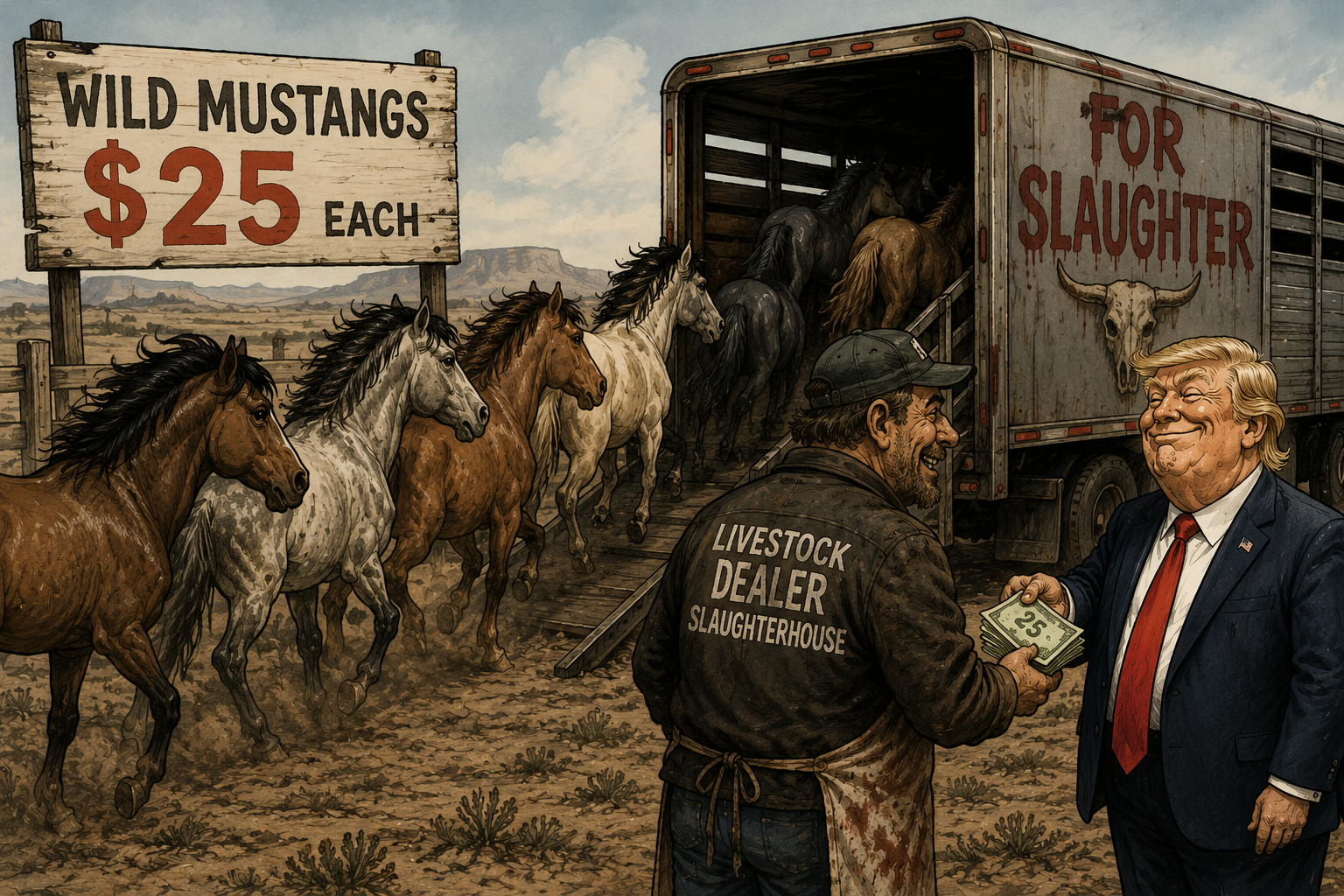
Sixty-eight wild mustangs once ran free in the high desert of southeastern Oregon. The federal government rounded them up, held them in Idaho and eventually sold them to an Ohio livestock dealer for $25 apiece.¹
That is not a typo.
Twenty-five dollars.
The horses were hauled about 1,800 miles to his property. Around midnight the next night, two double-decker cattle trucks arrived, loaded them and drove away. The dealer says he did not send the horses to slaughter, but he will not say where they went. Nobody has proved those particular mustangs are dead.¹
That uncertainty is the story.
When the Bureau of Land Management sells a wild horse rather than adopts it out, ownership passes immediately to the buyer through a bill of sale.² The government that rounded it up, fed it, cared for it and protected it stops tracking what happens next. And this is not some imaginary loophole dreamed up by animal-rights activists. More than a decade ago, an Interior Department investigation found that a Colorado buyer had purchased roughly 1,700 BLM horses that wound up in the Mexican slaughter trade.³
You might think that would have caused someone in Washington to say, “Maybe we should fix this.”
Instead, sales accelerated. In fiscal 2025, BLM sold 3,718 wild horses and burros, up from 1,509 the year before. Horse sales alone rose from 793 to 2,387.⁴