Most companies ask artificial intelligence one question: How many people can it replace? Then they start counting calls, minutes, workers and the savings headed for the bottom line.
They are asking a large technology a very small question.
The better question is what the company can now do that it could not do before.
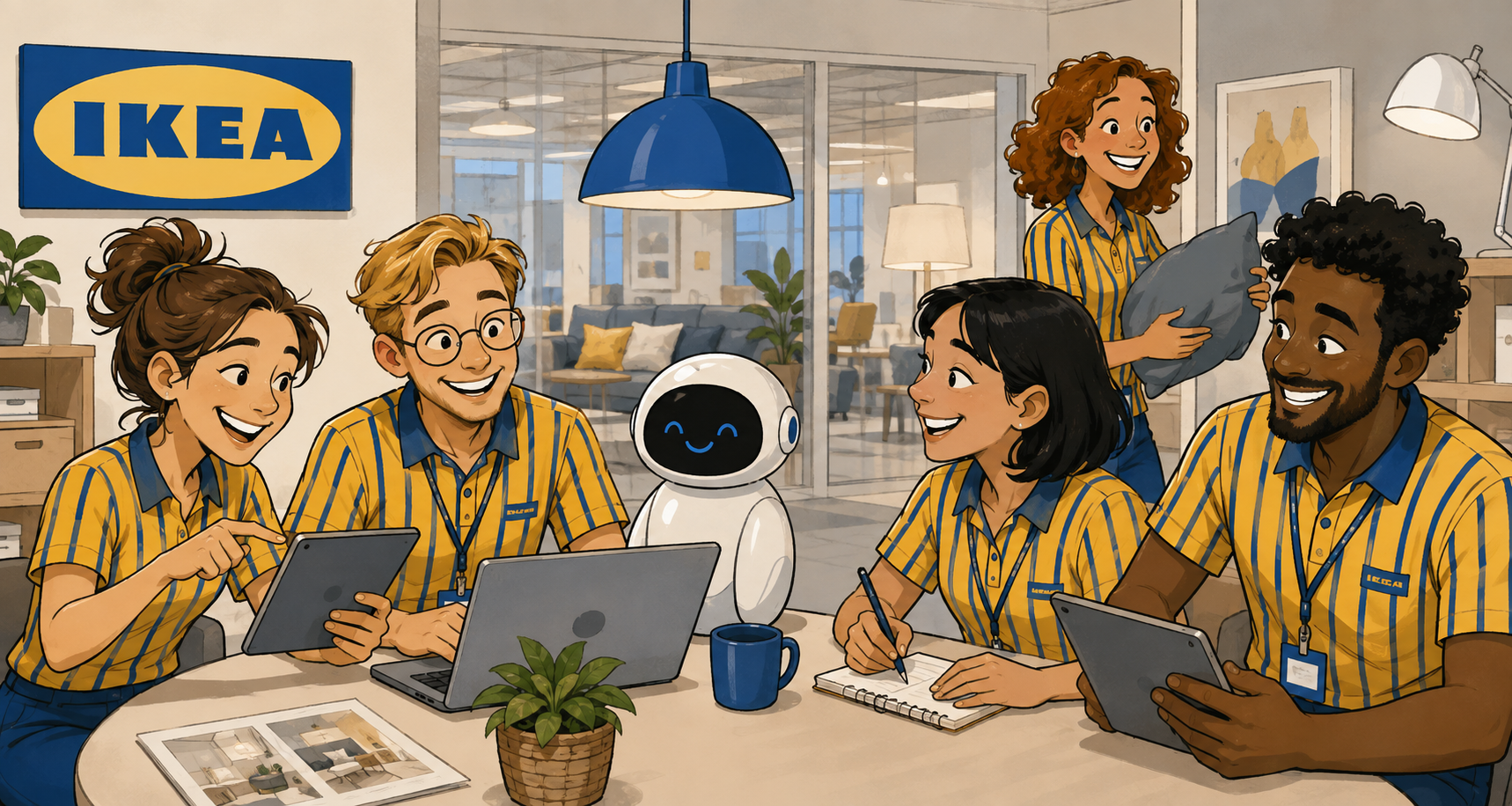
That is what makes the IKEA story worth paying attention to, with a few corrections. Ingka Group, the largest IKEA retailer, did not simply drop a chatbot into customer service and start counting bodies. It built an AI-powered assistant named Billie to handle routine customer questions, product information and recommendations. From 2021 to 2023, Billie resolved roughly 47 percent of the inquiries it received, or about 3.2 million interactions, saving nearly €13 million.¹
Most executives understand that part. A machine did repetitive work faster and cheaper. The more interesting part is what Ingka did next.
Instead of treating its call-center workers as surplus inventory, the company trained 8,500 of them in remote interior design, digital retail sales, relationship-building and more complex customer problems.¹ The remote customer channel had already become a serious business. In Ingka’s 2022 financial year, sales through remote customer meeting points reached €1.3 billion, about 3.3 percent of total sales, with a stated goal of reaching 10 percent by 2028.²
The bot did not create that opportunity. It exposed it.
Once routine questions were automated, Ingka could see more clearly what customers still wanted from people: judgment, taste, reassurance and help translating a catalog into the messy reality of a room, a budget and a household. Simply lowering the cost of a call center misses that larger opportunity. The questions the bot cannot answer may reveal the next service customers will pay for.