Monday, 10 a.m.
A UCLA student sits for an online final with a camera watching, a mirror behind her, and her arms positioned so the professor can see she is not secretly consulting a machine.¹
That may have begun as academic integrity. By the time it gets to mirrors, crossed arms, hands behind heads, suspicion over Google Docs timestamps, and students building an alibi for every draft, it has become something else. It has become training in distrust.¹
This is one of the stranger things about the arrival of artificial intelligence. The same country that cannot wait to sell every office worker a productivity tool is teaching many students that the same tool is contraband. The same employers who increasingly expect AI fluency are hiring graduates who spent college learning that admitting AI use could get them punished.²
We are not preparing young people for the future of work. We are preparing them to hide how they work.
There is a good reason to worry about AI. A student should not submit a machine-written essay as personal work in a class meant to test unaided writing. A lawyer should not file a legal brief with fake cases invented by a chatbot. A reporter should not publish a synthetic image that looks like documentary evidence. A manager should not hide behind an algorithm when making a decision about someone’s job, loan, medical care, or freedom.⁷
But sensible caution has curdled into a kind of technological Puritanism. Instead of asking what the person did, what the machine did, and who remains accountable, we are creating a general confession: AI used here.
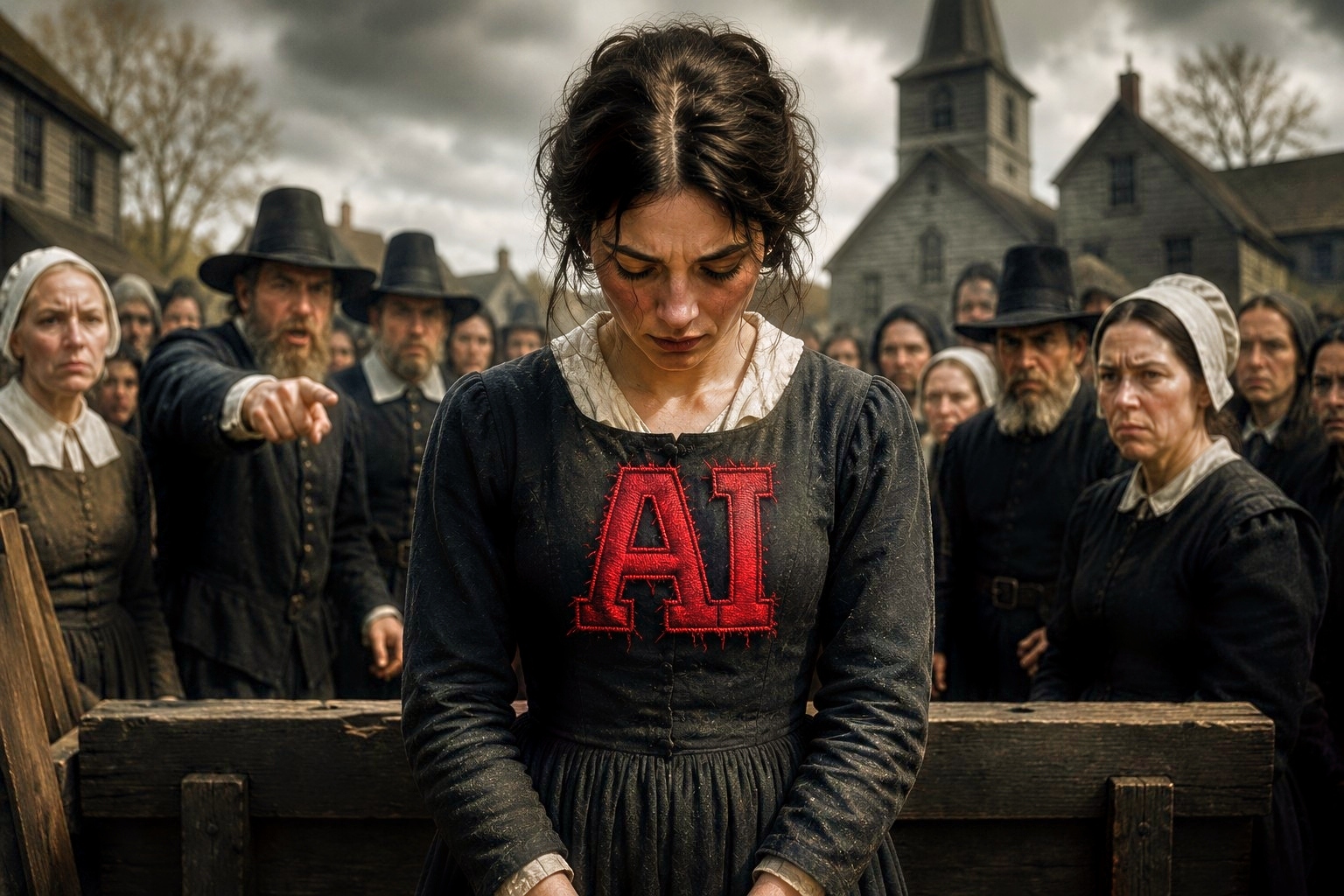
That label is not neutral. It often functions like a scarlet letter.