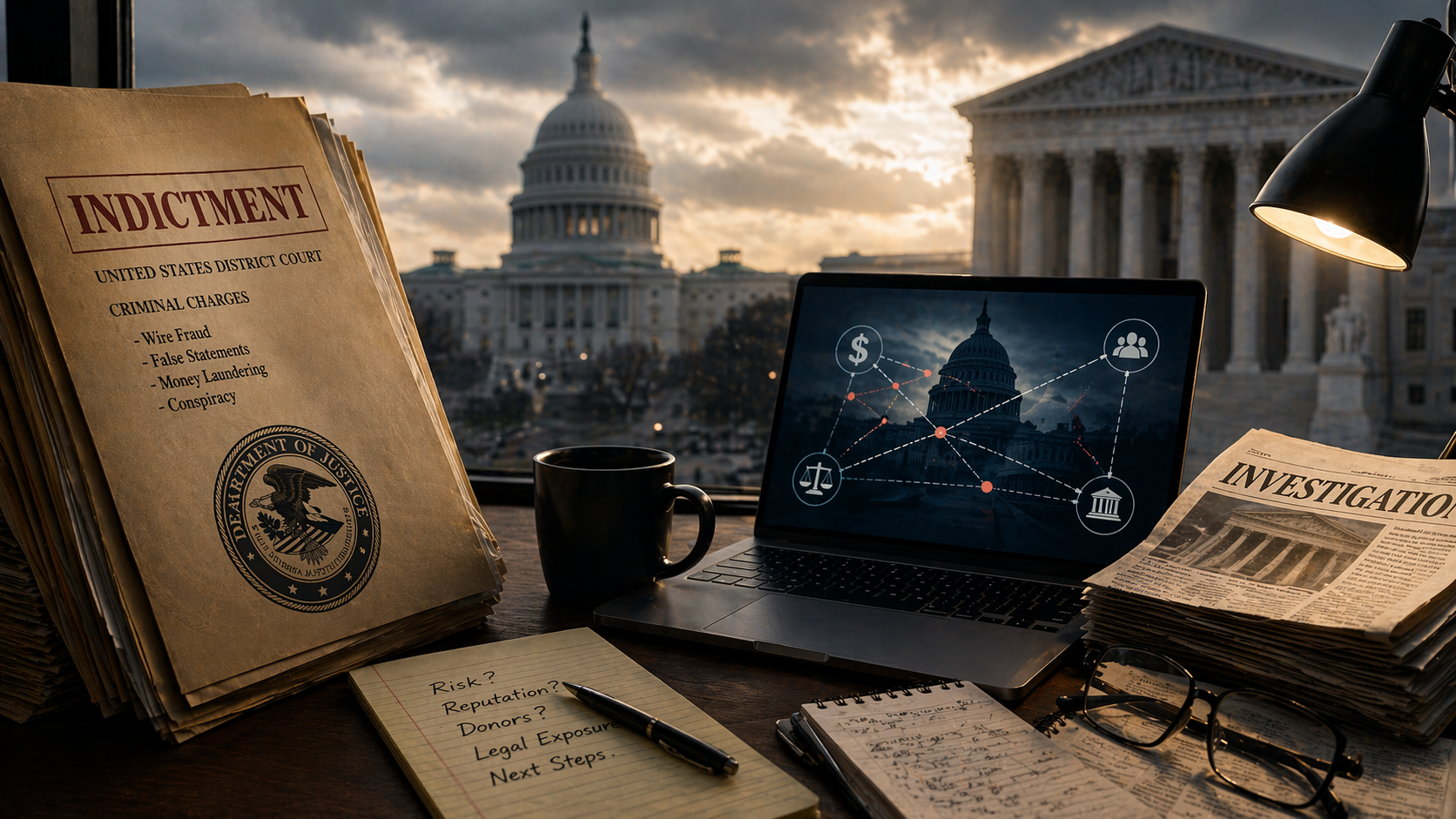
How legal exposure is reshaping decisions across politics and civil society
The envelope was heavier than it needed to be, thick cream stock with a return address that looked routine enough to ignore, which is why he left it on the corner of the kitchen table while the coffee machine finished its slow grind and the morning settled into its usual rhythm.
He had just come back from his walk—same route, same pace, the same half-read headlines glowing on his phone—and nothing in the room suggested anything had changed, yet the envelope drew his attention in a way that made it feel less like mail and more like something that would alter how the rest of the day unfolded.
When he opened it, the language was careful, advising caution around future donations to the Southern Poverty Law Center, an organization he had supported for years without much deliberation, the kind of support that becomes automatic when the institution itself feels stable.
The letter referenced a federal indictment announced on April 21, 2026, and the possibility of financial exposure tied to allegations that the organization had concealed how certain funds were used, and although it did not tell him what to do, it changed the context in which any decision would now be made.
“I don’t know what’s true anymore,” he said later, not as a declaration but as a recalibration, the kind that happens when familiar categories begin to blur.
The indictment itself is specific. According to the Department of Justice, a grand jury charged SPLC with wire fraud, false statements to a federally insured bank, and conspiracy to commit money laundering, alleging that from roughly 2014 through 2023 the organization routed more than $3 million through intermediaries to individuals associated with extremist groups while representing those expenditures in ways prosecutors say misled donors and financial institutions,