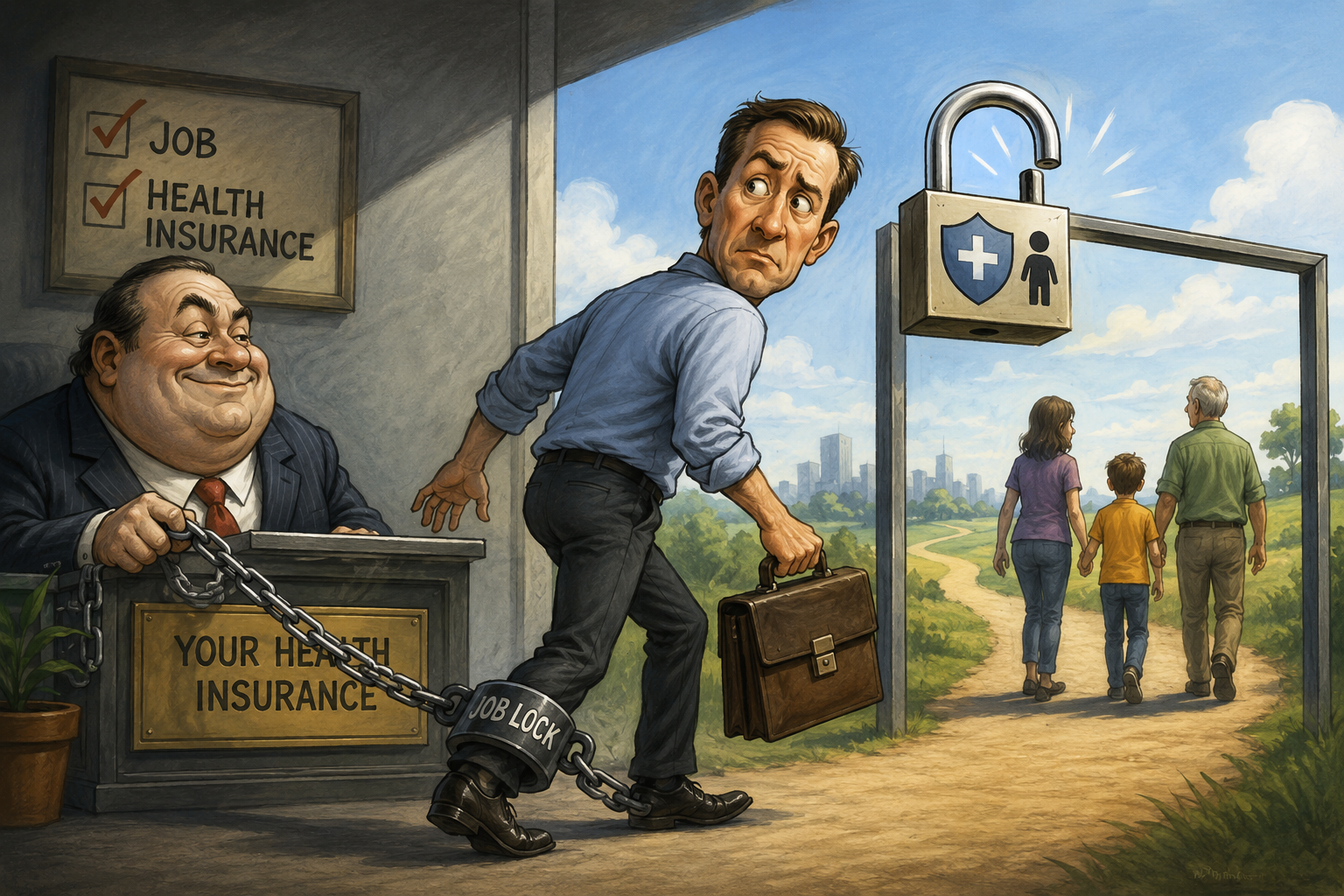
Jacob McDonald is 47 years old, works as a network engineer in Dallas and has been thinking about retiring early. He and his wife have saved carefully, their children are nearly grown, and the numbers seemed to be coming together. Then he looked at what it would cost to keep the family’s health insurance after he left his job.
The answer was roughly $4,000 a month through COBRA.¹
That would be nearly $50,000 a year before the family paid a deductible, a copayment or the portion of any medical bill the insurance company decided wasn’t covered. McDonald could leave his employer, but he couldn’t afford to leave the employer’s health plan. His retirement decision was no longer mainly about whether he had saved enough money to stop working. It was about whether he could risk losing the company’s contribution toward insurance.
McDonald appears to have good health insurance. What he doesn’t have is ownership of it.
The policy covers him and his family, but it belongs to the job. His employer chooses the plan, pays most of the premium and claims the tax advantage. McDonald receives the coverage only while he remains connected to the company. He may technically be allowed to continue it temporarily through COBRA, but once the employer contribution disappears, “keeping” the plan becomes a rather academic distinction.
This isn’t an unusual problem affecting a few people who want to retire early. A West Health–Gallup survey released this month found that 24 percent of workers who depend on employer-sponsored insurance—about 23 million Americans—remain in jobs they would prefer to leave because they are afraid of losing their health coverage.