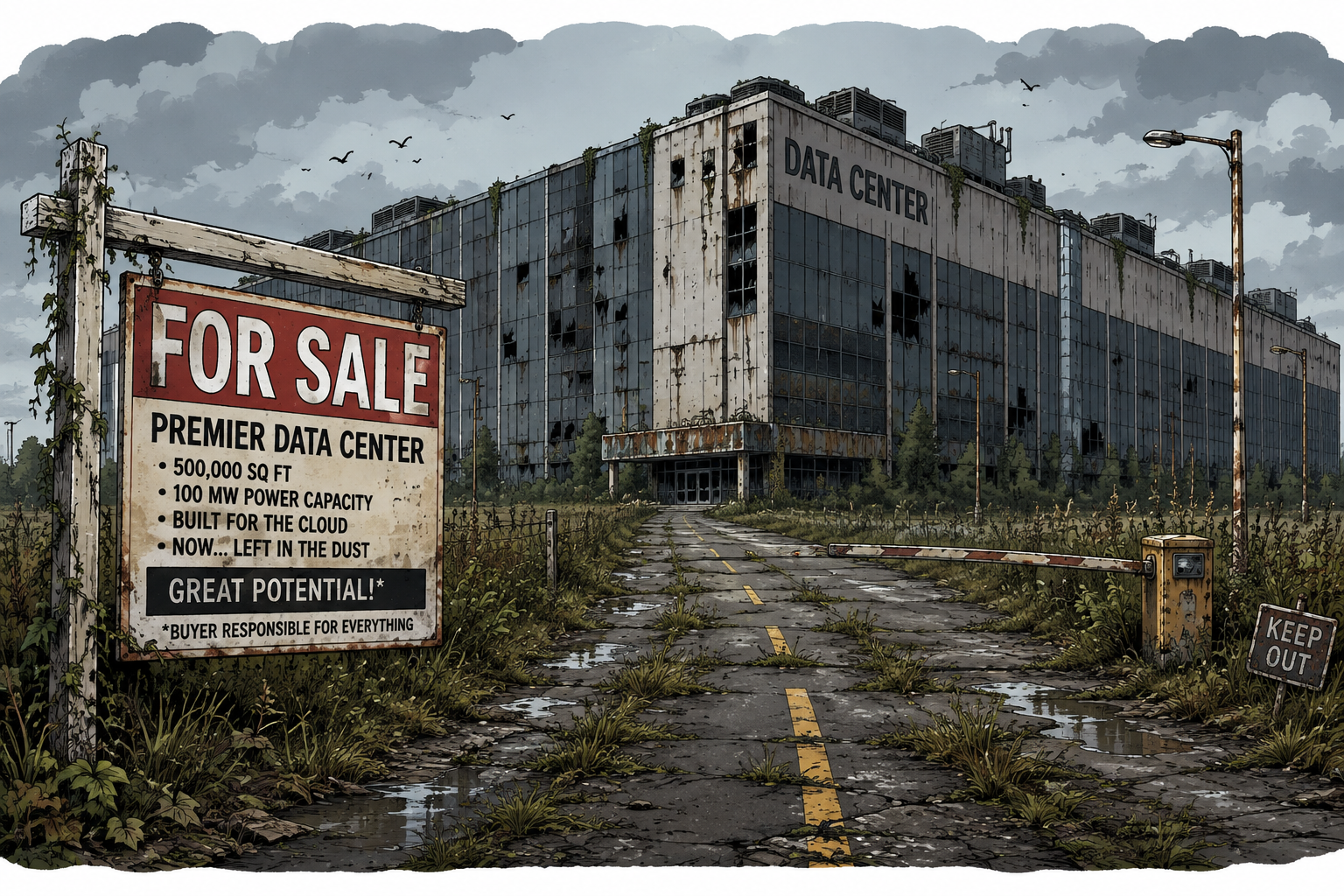
OpenAI is planning a data-center complex in Effingham County, Georgia, with a contracted electrical supply of 3.2 gigawatts, delivered in stages between 2028 and 2032. At full continuous use, that would consume roughly as much electricity as 2.7 million average American households.¹,² That is an astonishing amount of power for one computing complex, and it may turn out to be exactly what OpenAI needs.
But by the time the final substation is ready, I wonder how much of the artificial intelligence that sorts our photographs, reads our email, searches our files and helps write our letters will still be running in places like Georgia. A lot of it may be running on the machines already sitting on our desks.
That is the question buried inside the data-center boom. We are building enormous amounts of power and computing capacity on the assumption that the machines needed to create artificial intelligence will also be the machines we need to use it. I’m not sure they will be.
When I worked for Digital Equipment Corporation and Data General in the 1970s, serious computing still belonged mostly to institutions. DEC and DG were among the companies pulling it out of the mainframe room. Their minicomputers were smaller, cheaper and much easier for scientists, engineers and businesses to use directly.³ They didn’t make the mainframe disappear, but they did stop it from owning everything.
Mainframes continued running banks, airline reservations and enormous corporate systems. They still do. What changed was all the ordinary computing that no longer had to be sent to them. First it moved to minicomputers, then to personal computers, and eventually into laptops and phones. The mainframe survived because there were still jobs that really did require a mainframe.