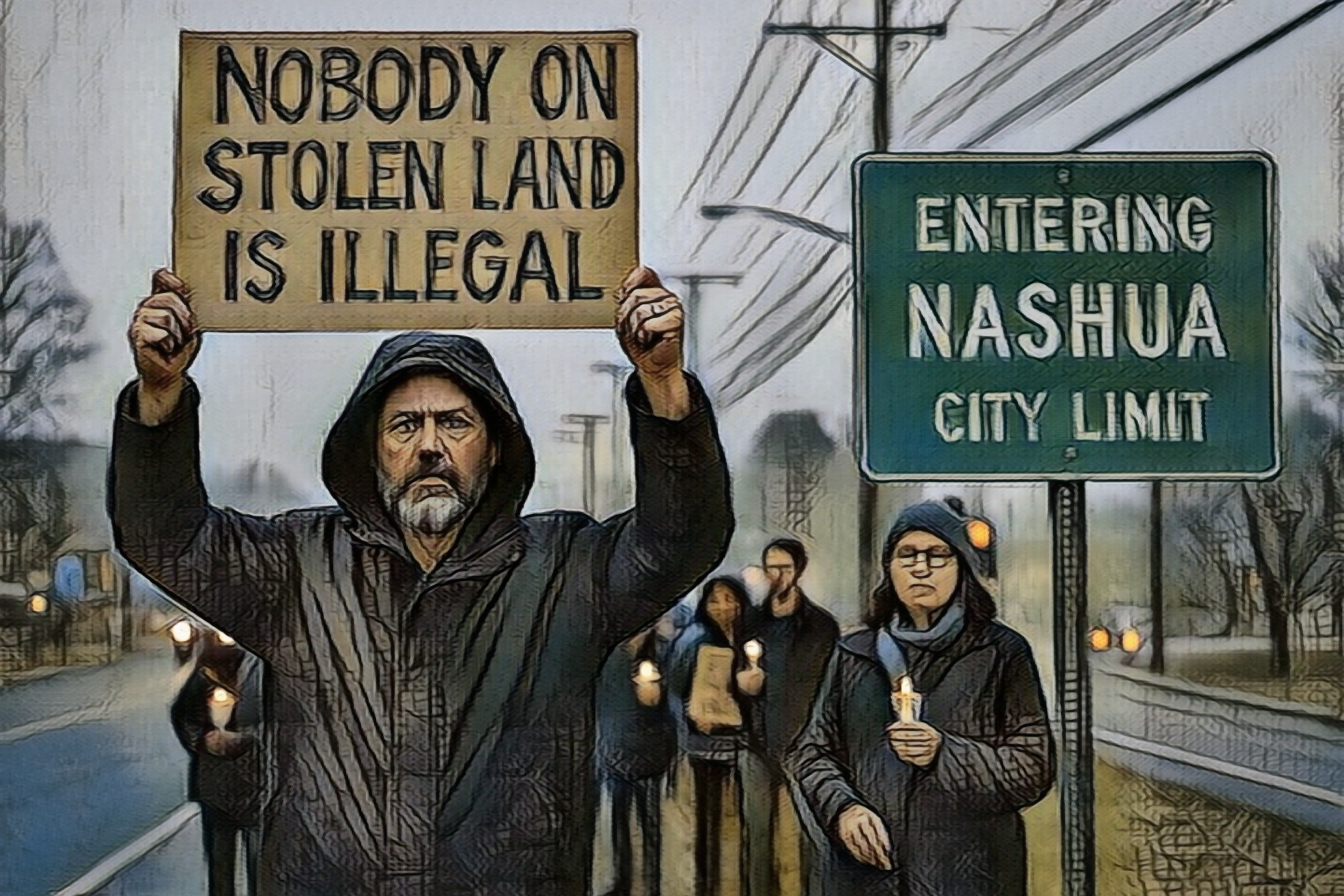
On a cold February morning, Arnuel Marquez Colmenarez walked into a Nashua courthouse to settle a misdemeanor. Minutes later, he was tackled by federal agents in the lobby and hauled away in front of stunned onlookers. One elderly man using a cane was knocked over in the scuffle. There was no warning, no explanation, and no warrant presented.
“Even people with valid asylum claims, work permits, or jobs are very frightened.” — Sarah Jane Knoy, Granite State Organizing Project
The arrest—recorded on surveillance footage and shared in grainy clips across social media—reverberated far beyond the courthouse walls. It marked a turning point. Not because it was the first such action in New Hampshire, but because it confirmed what many had feared: nowhere is safe.
That sense of insecurity has spread quickly. New Hampshire wasn’t supposed to be a frontline. It’s not Boston. It’s not the border. But immigration enforcement here has grown quieter and more brazen all at once—unannounced visits to restaurants, raids without warrants, courthouse detentions mid-arraignment.
In Concord, agents walked into a popular Mexican restaurant and took two workers off the line during a Friday lunch rush. No charges. No accusations. Just gone.
“I live in a state that has a slogan: ‘Live Free or Die.’ We’re seeing this kind of approach that is undermining that.”
That’s from a Peterborough business owner, one of many who watched as four employees at Mi Jalisco were pulled out of kitchens and off registers this winter. The co-owner, Genaro Quezada, said simply: “We’re working people. Everything is legal.” The raid forced a temporary closure and left regulars rattled.