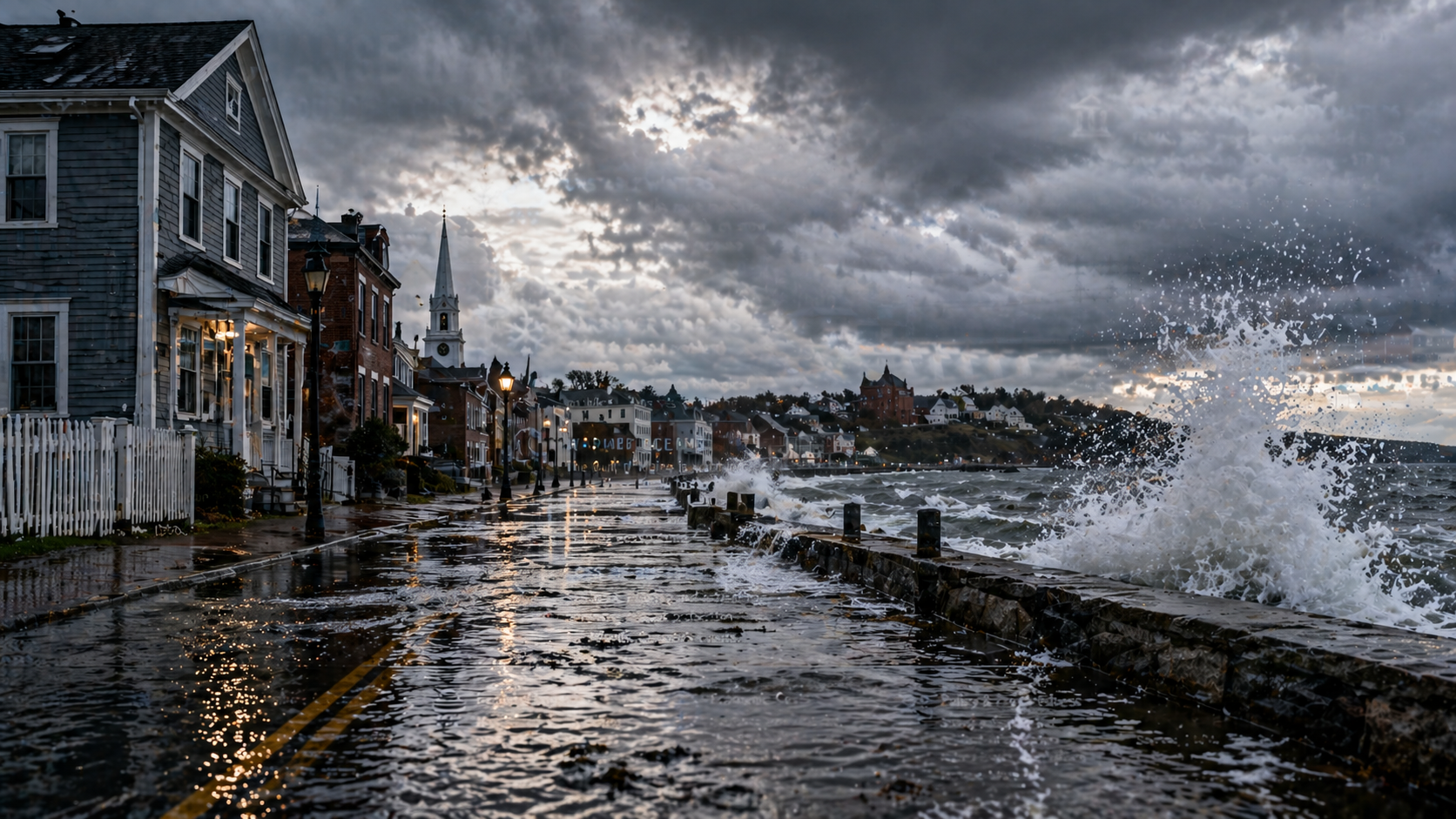
The tide doesn’t have to roar into Portsmouth to make its point.
Some mornings it just arrives a little too high, stays a little too long, and pushes through a piece of infrastructure that was built for a different version of winter. A storm drain that used to empty into the Piscataqua reverses direction. Water comes up instead of going down. It spreads across the street, finds the low spots, and holds there longer than it should.
No one calls it a disaster. Not yet.
A few blocks get wet. A basement takes on water. Public works adds another item to a list that never quite clears. By afternoon the tide falls back, the street dries, and the town returns to normal, which is to say, it absorbs the cost and moves on.
That’s how this story works here. It doesn’t announce itself. It repeats itself.
Nothing fails all at once. It just keeps costing more to live the same way.
Out in the Pacific, the setup is taking shape. The trade winds weaken, the warm pool that normally sits piled up in the western Pacific begins to slide east, and heat stored in the ocean is released into the atmosphere. That shift reorganizes the jet stream—strengthening the southern branch, loosening the grip of Arctic air over the northern tier, and redirecting where storms draw their energy and moisture.¹²
El Niño is part of the system. It always has been.
What matters now is where it lands.