In New Hampshire today, the sky is dark and yellow. Spend a few minutes outside and your eyes begin to burn. You think you can smell smoke, although it’s faint enough that at first you wonder whether you’re imagining it.
You aren’t. The smoke has traveled hundreds of miles from wildfires burning across Canada. Here, it means closed windows, an air-quality warning and perhaps a shorter walk for the dog. The wind will eventually change, the sky will turn blue again and the fire will disappear from our lives.
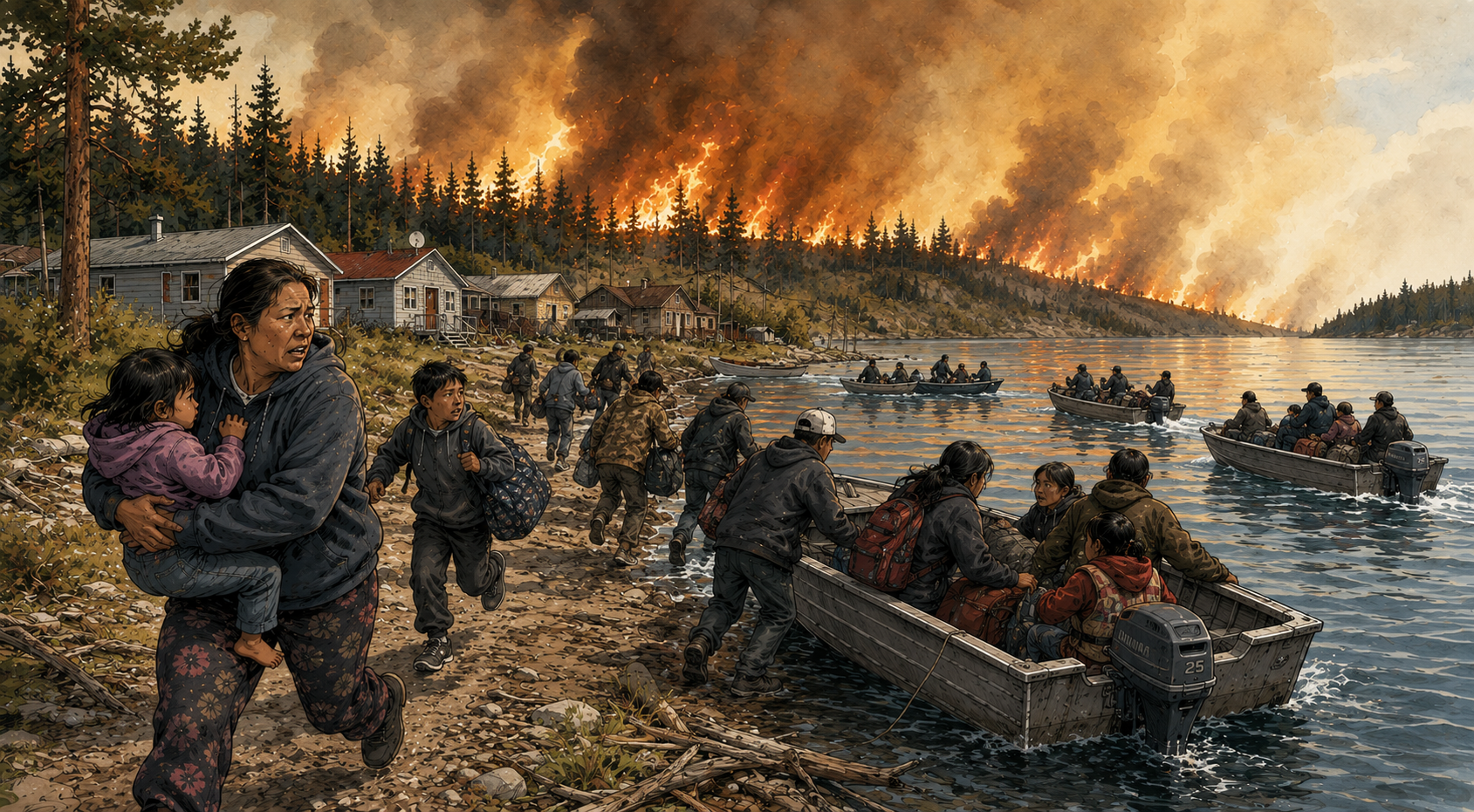
At Collins Lake in northwestern Ontario, the same smoke meant that people had only minutes to leave their homes.
Namaygoosisagagun First Nation is a small Ojibwe community about 130 miles north of Thunder Bay. It has no all-season road. When the fire came through the trees, families couldn’t get into their cars and follow an evacuation route south. They ran to the shore and climbed into personal boats as flames reached the houses behind them.
“At this time, we do not know the scale of the damage to our community,” Chief Helen Paavola said as residents waited for an aerial assessment, “but we know that trees directly next to our houses were on fire as community members fled by boats.” Some escaped with only the clothes they were wearing.¹
It’s hard to understand what “minutes” means until you mentally walk through your own house. There’s no time to choose the photographs or find the prescriptions. At Collins Lake, there wasn’t even a car. You took a child, perhaps a bag if one was within reach, and ran for the water.
Everyone was believed to be accounted for. Homes and community buildings were destroyed, and the Anishinabek Nation described the loss as the devastation of an entire community.²