The quiet ways a system can start picking the same winner
A country can keep its elections—and still stop changing. Hungary figured it out first.
The television over the bar had Fox News on, the volume set just high enough that you couldn’t ignore it, the sound threading through the room without ever quite taking it over. Conversations moved around it, dipping and rising, while the man at the end of the bar glanced up every so often—not really watching, more checking, like someone keeping an eye on a scoreboard he wasn’t sure he trusted.
“They keep saying his name,” he said. “Never heard of him.”
He meant Viktor Orbán.
Which is part of the story. Because Orbán isn’t as obscure as he sounds—not in the places where political strategy gets discussed and borrowed. His name comes up more often than most people realize. Not loudly, not always explained, but often enough that the influence is there, even when the connection isn’t obvious.
That gap—between how little most people recognize the name and how much attention it gets in certain circles—is where this story lives.
That’s where most Americans run into it, if they notice it at all—not as something urgent, but as something off to the side. It shows up, you half-hear it, and then it’s gone. It doesn’t feel like a problem, so it doesn’t stick.
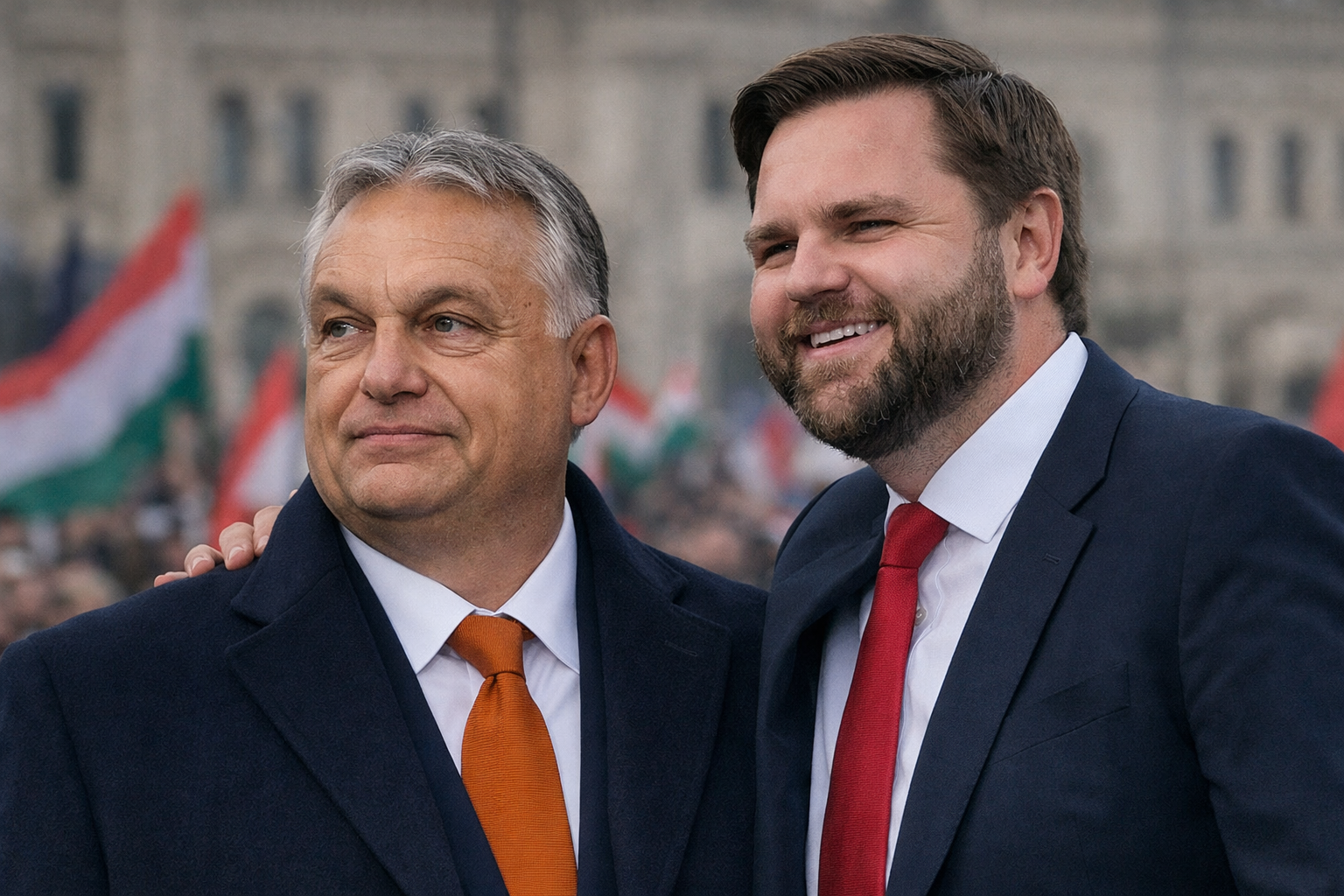
On the screen, they were showing Budapest: a wide square filled with people, flags moving in uneven waves,