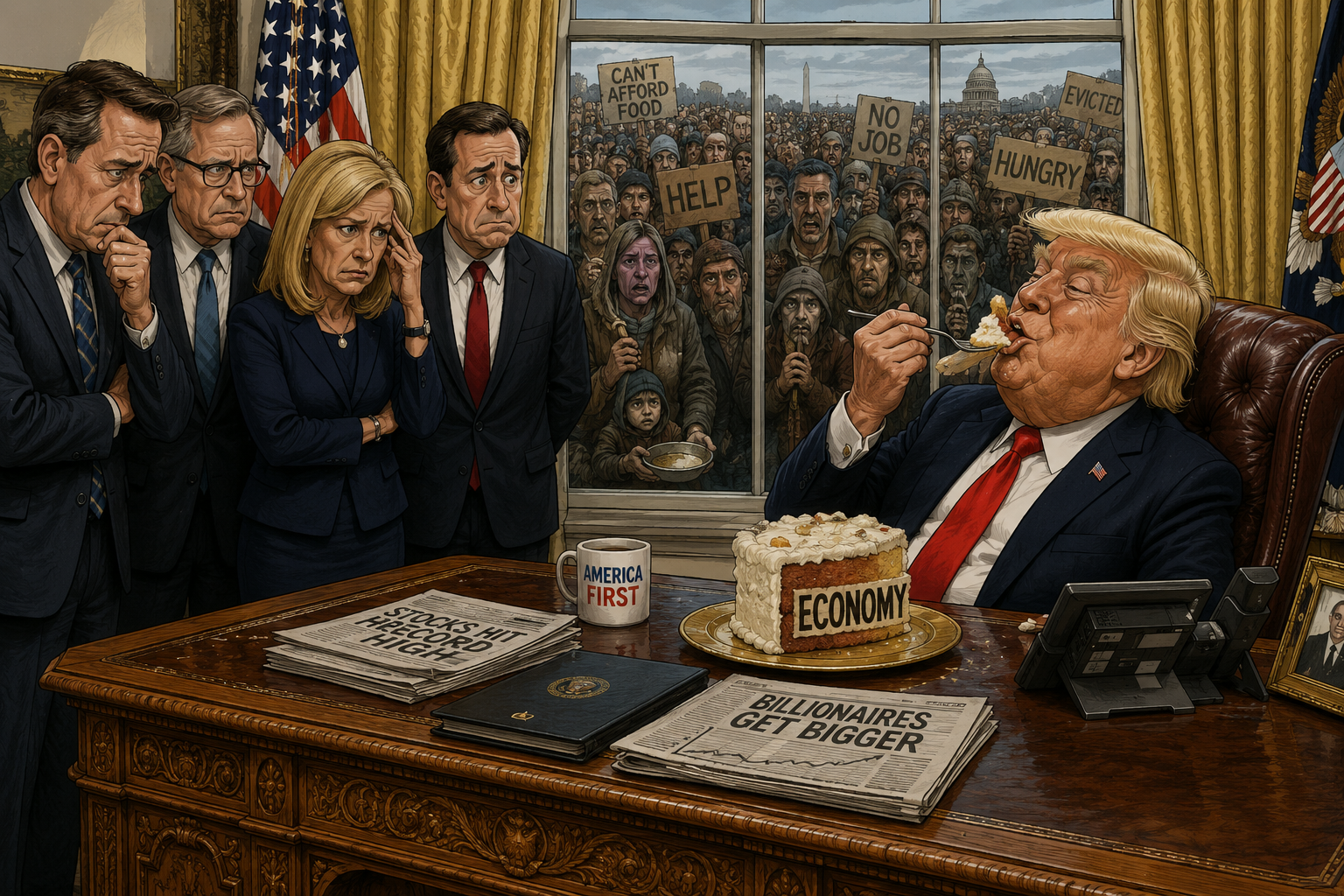
Last week the Bureau of Labor Statistics put out a number that ought to make anyone worried about making ends meet take notice.
It’s further proof that America is getting richer, but less of what it produces is going to workers. The share going to labor is now the smallest since the government began tracking it in 1947.¹
And, while it’s tough enough for most of us to pay the bills and buy groceries, the guys at the top seem baffled that everybody doesn’t have a ballroom and a private jet. Donald Trump has made that disconnect unusually easy to see. He has called affordability a Democratic “con job.” And when he was asked in May about Americans’ financial situation as he dealt with Iran, his answer was remarkable: “I don’t think about Americans’ financial situation.”²
Ada Torres, who lives in Cleveland, Texas, with her daughter and three grandchildren, has a different view. Hamburger has become too expensive for the family to buy regularly, so she shops the specials and stretches what she can find. “Prices are sky-high. One hundred dollars’ worth of groceries these days is nothing,” she told the Associated Press.³
That is the economy most people know. Food costs a lot more than it did before COVID. So does rent. Insurance, utilities and health care keep taking bigger bites. Economists keep telling us inflation has come down. That’s fine. Grocery and gas prices aren’t listening.³ ⁴
There are plenty of reasons prices went up. COVID wrecked supply chains. We haven’t built enough housing. Interest rates rose. Wars pushed around energy and food costs. Bird flu made eggs ridiculous. Those things explain a lot about why everything costs more, but they leave a much bigger question hanging there: America keeps getting richer.